
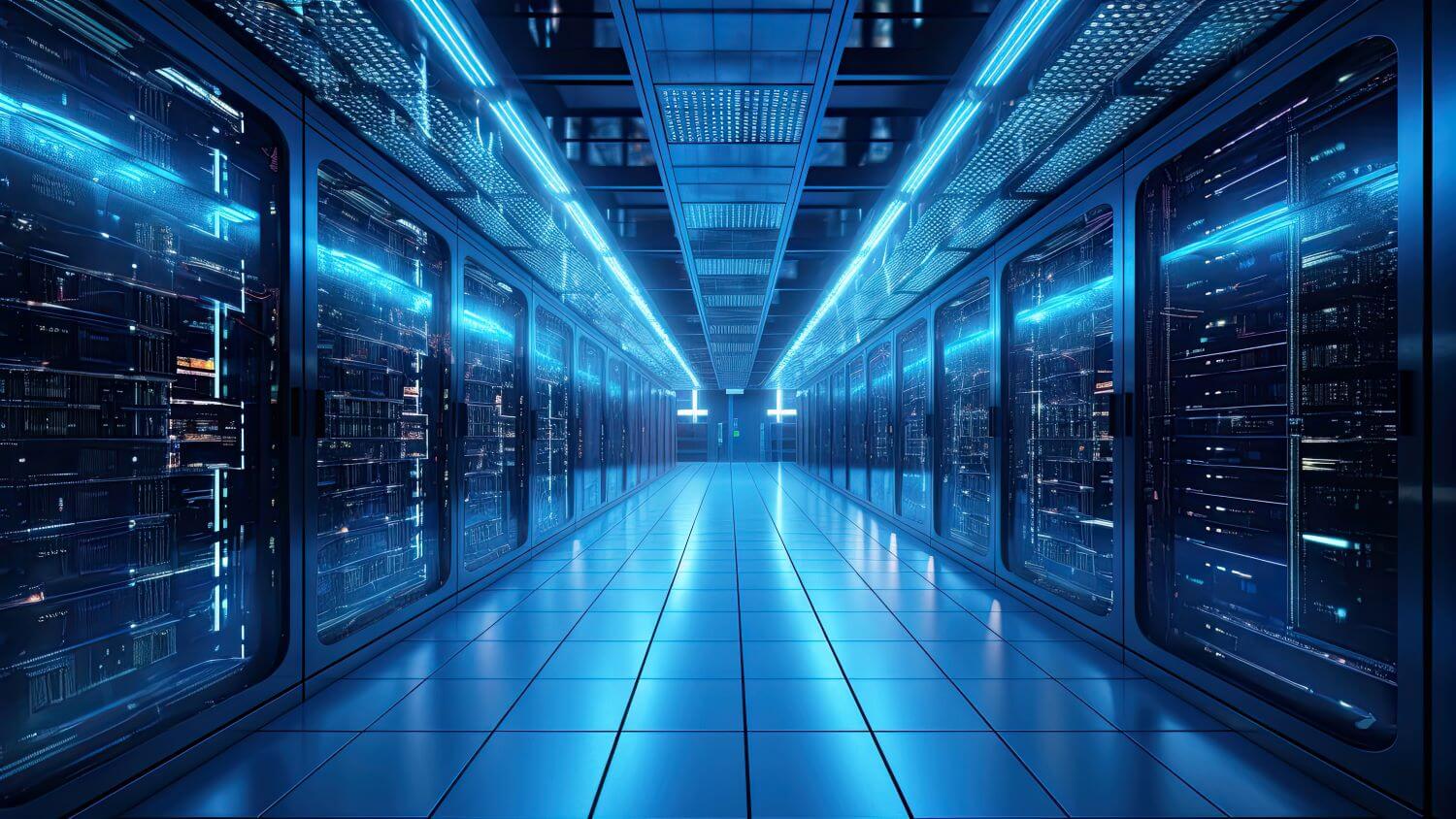
There's no denying that the data center industry is revitalized by the arrival of the AI era. With demand growing every day, scalable solutions are vital to efficiency and successful innovation. By 2030, about 70% of the demand for data center capacity will be for facilities equipped to host AI workloads.
Technology companies whose products are ubiquitous in traditional data centers are in a race to close the AI readiness gap. While innovation is critical, it is not enough. To ensure performance, solutions must be designed and validated for AI and high-performance compute (HPC) workloads in multi-vendor technology environments. Integrating, deploying, scaling and supporting them globally requires seamless operational expertise.
What Does it Mean to Be AI-Ready?
AI-powered data center solutions differ markedly from traditional data center solutions. While the infrastructure is similar, it is by no means the same.
In an HPC environment, storage products must be able to handle massive, unstructured data sets and use tiered architectures to feed data to graphics processing units (GPUs) at speeds unfathomable a decade ago. Memory devices require more bandwidth, capacity and resilience for tasks such as model training. Lightning speed, low-latency fabrics are required for networking. High-density racks pull exponentially more power and produce extraordinary amounts of heat, impacting every aspect of infrastructure mechanics. And all of this happens in a multi-vendor environment where downtime isn’t tolerated.
AI workloads are hypersensitive to disruption and push infrastructures to their limit. Technology companies’ products must be engineered to meet the moment — reliably and at scale.
Operationalizing Innovation: 4 Key Considerations
AI infrastructure solutions demand greater performance, flexibility and operational precision across the entire product lifecycle, from design and validation through deployment and maintenance. There are four primary considerations every technology company should keep in mind when transitioning a portfolio for the AI era.
1. Multi-Vendor Solutions Expertise:
AI infrastructure solutions feature deep multi-vendor integration with tight orchestration across compute, storage, networking, power and cooling. To ensure interoperability and performance in a diverse technology landscape, innovators must understand not only how their own products function, but how they interact with others in a high-pressure environment.
2. Design, Validation and Maintenance for AI Workloads:
The steady, predictable workloads and standard power and thermal requirements of the past are giving way to AI workloads that come with extreme performance, reliability and scale demands. It’s imperative that the design, testing and validation of hardware, software and integrated systems reflect actual deployment environments and production-scale AI and HPC workloads.
3. Deployment and Integration at Scale:
Speed to deployment is critical for return on investment (ROI) when developing AI-infrastructure solutions and technology. Fully integrated, pre-tested racks are preferable to onsite integration, which means reliable, turnkey solutions are more likely to gain a foothold in these environments. Additionally, upgrading existing data center equipment requires a balance of investment, budget and time — all of which a services partner can help offset, allowing reinvestment in future product development.
4. Inventory Management and Repair Expertise:
In traditional data center solutions, less stress on hardware means fewer urgent repairs. Maintenance cycles and spare parts forecasting follow familiar patterns. Conversely, components in AI infrastructure solutions are subject to intense, continuous workloads and require rapid response to hardware failures. Global inventory management, a resilient supply chain and local repair capabilities reduce the risk of downtime, are foundational to operational resilience and support sustainability
Partnering for Global Technology Lifecycle Orchestration
With innovation of the essence, many technology providers are focused on research and development — and rightly so. But that’s just one aspect of the product lifecycle. Thriving in the AI era requires that all stages be connected and executed efficiently, from design and deployment through repair and decommissioning. Design decisions made at the start are significant throughout the entire product lifecycle. Any gaps or flaws in the solution architecture not only present risk to the customer experience, but can also affect the ROI of the solution long-term.
Engaging a partner with expertise in AI-ready data center infrastructure, solution integration, global supply chain and inventory management as well as multi-vendor support and global repair services offers a competitive advantage to those who prefer to focus on their core capabilities without losing sight of other critical functions. The right partner should have the proven ability to:
- Manage global logistics with the speed, accuracy and detail that complex solutions require — and your customers expect
- Service a diverse hardware and software ecosystem to ensure seamless solution integration
- Deliver rapid technical support and repairs close to major markets to limit downtime
- Design, test, validate and maintain products in high-density compute environments
- Help you meet cost-efficiency and sustainability goals, and derisk compliance via circular economy practices
- Provide visibility and control across the full product lifecycle for fast, confident decision making
- Accelerate time to cash for complex, multi-vendor solutions with flexible financing models
Turn Innovation Into Robust, Future-Proof Solution Deployments
Deployment at the speed and scale that customers expect requires operational finesse across the product lifecycle. In the eBook, “From Innovation to AI-Ready With an Outsourcing Partner,” discover how an outsourced services partner can help technology companies navigate and reduce complexities in bringing AI-ready solutions to market.
About the Author
 As the Vice President of Quality Operations & Global Integration Services, Jen Ruth oversees Quality Operations for TD SYNNEX and leads Global Integration Services for Shyft Global Services and TD SYNNEX integration services in North America. Her astute oversight of the Global Integration Services team helps ensure seamless execution for all integration services TD SYNNEX offers, including complex, highly customized, white-glove deliverables through Shyft. Shyft Global Services is a division of TD SYNNEX (NYSE: SNX).